






What Are The Safest Areas Of London To Live In (in 2026)?
The most recent data from the Metropolitan Police confirms what residents of outer London have known for years. Violent incidents resulting in injury fell across every single one of the 32 boroughs from August 2024 to August 2025. That's nearly 9,000 fewer offences across the capital. Knife crime is down 19%. Residential burglary is down 10%. Personal robbery is down 13%. And in January 2026, the Metropolitan Police confirmed that London recorded just 97 homicides in 2025, the lowest figure since 2014, and the lowest murder rate per capita since comparable records began in 1997.
But where are the safest areas in London to live?
This guide uses two years of ward and borough-level crime data from the Metropolitan Police, covering May 2024 to April 2026, alongside wider context about schools, transport links, green spaces, and what it actually feels like to live in these places to find out.
Understanding the Data (and Why Raw Numbers Can Mislead)
Before getting into the rankings, it is worth understanding why the standard comparison, total crimes recorded per borough, can mislead as much as it informs.
Crime rates vary significantly across London, and a big part of that variation has nothing to do with how dangerous an area is to live in. Westminster regularly tops lists of the most crime-heavy boroughs in Greater London. In our 24-month dataset, it recorded over 167,000 offences, more than double any other borough. That sounds alarming until you consider that Westminster's residential population is around 260,000, but the area receives tens of millions of tourists each year. Oxford Street, Oxford Circus, Covent Garden, and the West End are not typical residential neighbourhoods. The high crime figures there reflect footfall, not the experience of people who actually live in quieter parts of the borough.
The fairer comparison is crimes per 1,000 residents. On that basis, the outer boroughs, which are genuinely residential, with far less through-traffic, consistently sit well below the London average of approximately 107 offences per 1,000 people.
One more important piece of context regarding this statement: violent crime resulting in injury fell in every single London borough in 2025. The crimes that are rising, phone thefts and shoplifting, for instance, are heavily concentrated in central areas with the highest footfall. For anyone choosing where to live in outer London, the trajectory of serious violent crime is genuinely positive.
London's Safest Boroughs: What Two Years of Data Shows
Using Metropolitan Police data covering May 2024 to April 2026, here are the boroughs that recorded the lowest total crime over the period. Where noted, per-capita rates are drawn from Metropolitan Police Connect data and independent analysis by CrimeRate for the year ending December 2024.
1. Richmond upon Thames - Southwest London
24-month total: 23,851 offences | Rate: approx. 60.7 per 1,000 residents | Trend: falling (-5.8%)
Richmond upon Thames has topped the safety ratings for years, and the raw data backs it up completely. In our two-year dataset, it sits at the lower end of all London boroughs for total crime, and per-capita figures from the Metropolitan Police for 2024 placed it at just 60.7 offences per 1,000 residents, lower than any other borough. Crucially, the trend is moving in the right direction: crime fell by 5.8% comparing the first 12 months of the dataset against the last 12.
The most common offences are theft and violence against the person, as they are almost everywhere. But the absolute numbers are low relative to the size of the population, and weapons possession is the least common crime in the borough.
Richmond itself has a village feel without sacrificing urban convenience. Richmond Park, nearly 2,500 acres of ancient woodland, open grassland, and free-roaming deer, sits behind the town. Richmond Hill offers panoramic views across the Thames. The town centre has independent shops, cafes, and restaurants alongside reliable transport links: the District line and London Overground connect to central London in around 20 to 25 minutes. The schools are consistently among the strongest in the capital.
Ward-level data reveals some particularly quiet pockets within the borough. South Twickenham and West Twickenham recorded the lowest crime rate of any Richmond ward over the two-year period, followed by Hampton, Hampton Wick and South Teddington. If you are weighing up specific streets, these areas are consistently quieter than the Richmond town centre itself.
The honest caveat: Richmond is expensive. Average house prices sit above 900,000 pounds, and rents are among the highest of any outer London borough. You are paying a premium for one of the safest, most desirable areas in the entire city.
2. Kingston upon Thames - Southwest London
24-month total: 23,415 offences | Rate: approx. 62.1 per 1,000 residents | Trend: marginal rise (+4.4%)
Kingston actually recorded fewer total crimes than Richmond in our two-year dataset, and its per-capita rate of around 62 offences per 1,000 residents means it consistently competes with Richmond for top spot in London's safest boroughs. The crime figures are as strong as anywhere in the capital.
Where Kingston differs from Richmond is in what it offers as a place to live. It has a proper high street with the Bentall Centre, riverside restaurants, a weekly market, and a real energy that Richmond's quieter town centre lacks. Residents consistently describe it as somewhere people move to and stay. One contributor to Mumsnet writes: "I moved here (Kingston) from zone 1 when my kids started primary, and I was stunned by how easily I made friends. (It gets harder when they go to secondary.) It made me wish I had moved here when pregnant, as I often found early motherhood in zone 1 lonely and stressful.
The grammar school provision here is exceptional: Tiffin School and Tiffin Girls' School are two of the most academically strong state secondary schools in the country, giving Kingston some of the best grammar schools in Greater London. Bushy Park and Richmond Park are both easily accessible. The 30-minute fast train to London Waterloo makes it work for central London commuters, giving it excellent transport links without the Zone 1 price tag.
The ward-level data is particularly reassuring. Berrylands and Tudor were the quietest wards in the borough over the 24-month period, followed by Motspur Park and Old Malden, which are calm, residential suburbs with a lower cost of entry and a genuine neighbourhood safety feel.
Kingston is meaningfully more affordable than Richmond. Average house prices sit around 763,000 pounds as of early 2026, and rents tend to be lower. For families who want the same safety record and green spaces as Richmond but with a slightly more grounded feel and lower cost, Kingston is arguably the stronger all-around choice.
3. Sutton - South London
24-month total: 26,357 offences | Rate: approx. 62.9 per 1,000 residents | Trend: essentially flat (+0.8%)
Sutton is the least famous of London's safest boroughs and, for that reason, often the most underrated. It sits at the southern edge of Greater London, close to the Surrey countryside, with crime levels that consistently rank among the lowest in the capital.
The appeal for families is especially strong here. Sutton has one of London's finest grammar school networks, Wilson's School and Nonsuch High School for Girls are both nationally regarded, alongside strong comprehensives. The leader of Sutton Council, a lifelong resident, described the borough as 'a fantastic place to live, work and raise a family', specifically citing its 'strong sense of community and some of the safest streets in London'.
The borough has a genuinely suburban feel, quieter than Merton and more residential than Kingston town centre. Nonsuch Park, with its historic mansion and wide-open grounds, is a popular local escape. Carshalton village, a short distance away, has a strong community character with ponds, independent shops, and weekend markets. Fast trains reach London Victoria and London Bridge in around 30 minutes.
Rents and house prices are meaningfully lower than in Richmond or Merton. For families whose primary concern is personal safety and excellent schools, and who are working with a realistic budget, Sutton delivers more of both than almost anywhere else in the capital.
4. Merton - Southwest London
24-month total: 27,242 offences | Rate: approx. 66.2 per 1,000 residents | Trend: falling (-5.9%)
Merton covers Wimbledon, Morden, Colliers Wood, and Mitcham, a broad spread of southwest London with some of the city's most appealing residential areas. Its crime trend is one of the most encouraging in London: a 5.9% fall over our dataset period, well ahead of the London average.
Wimbledon is the borough's most prominent draw and a genuinely desirable area. Wimbledon Common, over 1,100 acres of woodland and heathland, gives it an openness rare in a city this size. The village high street has independent shops and restaurants. The period properties are some of the most sought-after in South London. Direct District line services to central London, and fast trains to Waterloo in 25 minutes, mean the commute is straightforward for young professionals and families alike.
For those who find Wimbledon's prices steep, Morden and Colliers Wood offer much more accessible entry points into the borough; both have Northern line access and a quieter, more local feel with strong local amenities and good schools.
5. Bexley - Southeast London
24-month total: 32,179 offences | Well below London average | Trend: falling (-3.7%)
Bexley is the option for buyers and renters who need value as well as safety. It sits further east than the other boroughs on this list, which makes it less fashionable, but its crime levels are consistently low, and the downward trend in our data is clear.
The arrival of the Elizabeth line transformed commute times from Abbey Wood. Canary Wharf is under 15 minutes away, and Liverpool Street is under 25. That connectivity, combined with significantly more affordable housing than the southwest London boroughs, makes Bexley particularly attractive for younger professionals and first-time buyers who need quick access to the city without the Zone 1 price tag.
The borough is one of the greenest in London, with over 100 parks, and is currently undergoing significant regeneration, with new investment in housing, high streets, and local infrastructure. For those happy to trade a slightly longer journey to Zone 1 for more space, lower costs, and strong safety records, Bexley is worth serious consideration.
6. Harrow - Northwest London
24-month total: 33,387 offences | Well below London average | Trend: marginal rise (+2.1%)
Harrow rounds out our top six with crime levels comfortably below the London average, strong public transport connections into Baker Street and central London in around 25 minutes, and a borough character that genuinely blends village charm with urban convenience.
The borough is well known for Harrow School, the famous independent school on the hill, but state school provision is also strong, and the cultural diversity of the borough makes it one of London's more interesting communities. It attracts both young professionals and families, and its northwest location gives reasonable access to the M25 and the countryside beyond the city.
What About Central London? Hampstead, Notting Hill, and the Inner Boroughs
A common question from people moving to London is whether it is possible to live safely closer to the centre, in places like Hampstead, Notting Hill, or areas near Regent's Park.
The honest answer is: yes, but the picture is more complicated. Crime rates vary significantly between the inner and outer boroughs, and within the inner boroughs themselves.
Hampstead, in the London Borough of Camden, is one of the most sought-after village-like neighbourhoods in north London. Hampstead Heath provides the kind of space and greenery that is extraordinarily rare in central London. The Northern line puts you in the West End in under 15 minutes. The streets around the Heath are largely residential, with a strong local community and good schools. The crime picture here is more nuanced than in Richmond or Sutton: Camden as a whole has higher crime figures, but the residential streets around the Heath are far removed from the borough's more central hotspots around Camden Market and Kings Cross.
Notting Hill, in the Royal Borough of Kensington and Chelsea, is similar. The area around Portobello Road and the residential streets to the west and south can feel remarkably calm and community-oriented. But the wider borough covers some of the most tourist-heavy terrain in London, which inflates borough-level crime statistics significantly.
The areas around Regent's Park, Marylebone and St John's Wood, for example, are among the safest in inner London, with a quieter, more residential character than their proximity to Zone 1 would suggest. Personal safety concerns here tend to centre on opportunistic theft rather than violent crime.
If you want to live centrally and neighbourhood safety matters to you, the advice is the same as for the outer boroughs: check the ward-level data at police.uk for the specific streets you are considering, not just the borough-level headlines. And be aware that inner-borough crime statistics are heavily distorted by tourism and nightlife, the area five streets from Oxford Circus can feel completely different from the area two streets away.
Practical Safety: What Actually Matters Day to Day
Most safety advice for London is common sense that applies to any big city. But a few things are worth flagging specifically for 2026.
Phone thefts are rising. The Metropolitan Police reported around 80,000 stolen phones in London in 2024, a 25% increase on the previous year. The advice is simple: keep your phone in your pocket rather than in your hand on busy streets, avoid using it while stationary at transport hubs, and stay aware of your surroundings in crowded areas like Oxford Street and Oxford Circus.
Serious violent crime is falling sharply. London's homicide rate in 2025 was lower than Paris, Brussels, Berlin, and every major US city. If headlines have made you anxious about violent crime, the data says those fears are out of proportion with reality for anyone living in the residential outer boroughs.
Strong local policing makes a real difference. Boroughs like Richmond and Sutton benefit from active neighbourhood policing and well-established community watch schemes. The relationship between residents and their local police is part of what keeps neighbourhood safety levels stable over time.
Building security matters as much as neighbourhood. Secure entry systems, surveillance cameras, good lighting, and well-managed communal spaces are meaningful deterrents. A well-managed building in a very safe borough is the combination you are looking for.
Living in London with UNCLE
At UNCLE, personal safety is a genuine priority. Fob entry, signed-in guests, CCTV, good lighting, and someone available around the clock are standard across all our buildings. But the best foundation is choosing a location that already works in your favour.
Our London properties span north, south, east, and west. Colindale and Wembley in north and northwest London, Southall and Acton in the west, and Deptford, Elephant and Castle, New Cross, and Stockwell in the south. These are slightly different areas than Richmond or Kingston, but they all benefit from the same principle: a well-managed, well-secured building where residents feel genuinely at home in the city.
Our residents on Trustpilot put it better than we can. One UNCLE Elephant and Castle resident wrote: "London can be daunting but UNCLE Elephant and Castle made it easy to feel home and comfortable." A resident at UNCLE Acton described it as: "very peaceful and well-maintained. I feel safe, comfortable and welcomed." And from UNCLE Wembley: "there is a real sense of community of everyone that lives there." That strong sense of belonging in a city this size is what we are always trying to build.
If you are looking to live in London and want to understand the neighbourhood safety picture around any of our properties, speak to our team. Or use the ward-level data at police.uk to look at the specific postcode you are considering.
The Bottom Line
London is not the city the headlines describe. Serious violent crime is at historic lows. The outer boroughs that top the safety rankings, Richmond, Kingston, Sutton, Merton, Bexley and Harrow, are genuinely quiet places to live in, with strong schools, good local amenities, real community, and easy access to everything the capital offers.
Trying to decide where to move in London? The best decision is an informed one. Use the data. Check the ward-level picture for the specific address you are considering. Walk the area at different times of day. And remember that the experience of a place, the friendliness of neighbours, the quality of local schools and the ease of the commute matter as much as any statistic.
Data note: Borough-level crime totals are drawn from Metropolitan Police Service data (MPS Borough Level Crime, May 2024 to April 2026). Per-capita rates are drawn from Metropolitan Police Connect data and third-party analysis by CrimeRate.co.uk and Essential Living for the year ending December 2024. Ward-level data covers April 2024 to April 2026.

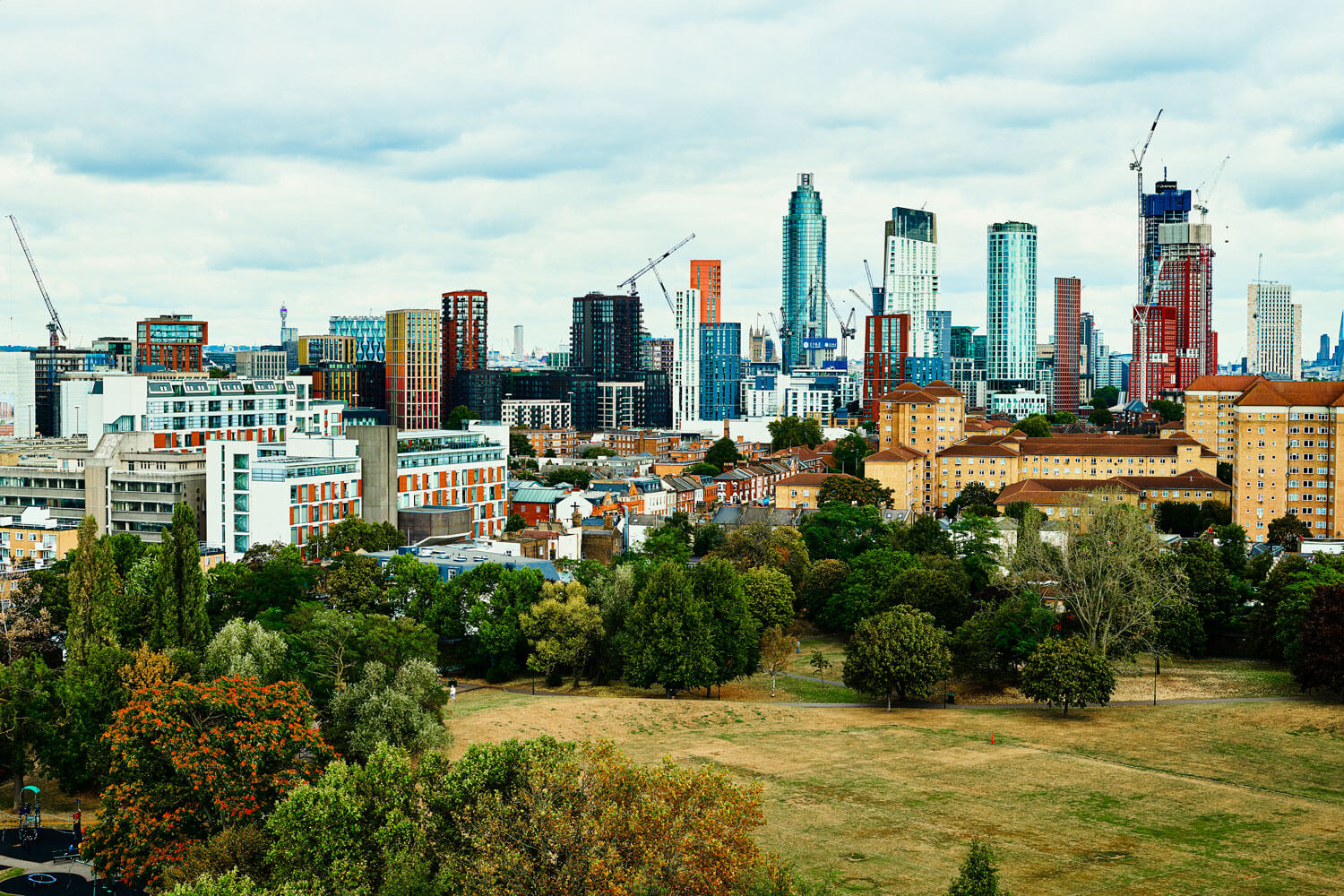
The not-so-concrete jungle: Explore the best parks in London